Related games
Published on: September 2026
Game technology: HTML5
Platforms: PC, Phone, Tablet
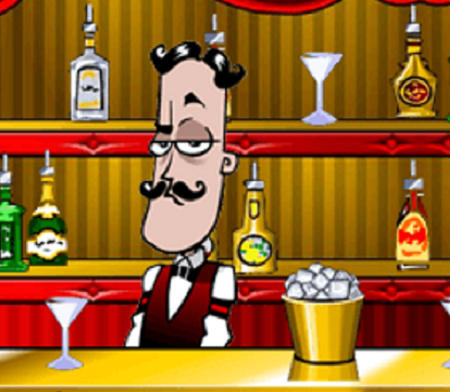
Bartender is a drink-mixing simulation game where the player prepares cocktails by combining ingredients behind a bar. There is no story campaign, character progression, or sequence of traditional levels. Instead, each attempt begins with an empty shaker and a shelf containing different spirits, juices, ice, and garnishes. The goal is to experiment with proportions, prepare a complete drink, and see how the bartender reacts after tasting it.
Choosing the Ingredients
The player selects bottles from the bar and decides how much of each liquid should be poured into the shaker. Available ingredients include drinks such as vodka, whisky, gin, champagne, Triple Sec, different juices, and soda, along with ice and lemon. There is no fixed order that must always be followed, so different ingredients can be combined in many ways. The amount poured matters as much as the choice of ingredients.
Pour, Shake, and Serve
Once the ingredients have been selected, the mixture must be shaken before it can be served. Holding the shake control for too long can cause problems, while serving the finished cocktail makes the bartender taste it and provide immediate feedback through his reaction. Different combinations can produce approval, disappointment, or exaggerated outcomes, giving players information about whether the proportions worked.
The basic gameplay consists of:
· selecting bottles and other ingredients;
· holding the Pour control to choose the amount;
· adding ice or lemon when needed;
· combining several liquids in one shaker;
· shaking the finished mixture;
· serving it and watching the bartender’s reaction.
Experimenting With Different Mixes
Bartender does not give the player a large map, enemies, or missions to complete. Most of the challenge comes from discovering ingredient combinations and learning how different proportions affect the final result. Since the bartender reacts immediately after tasting each drink, unsuccessful attempts become clues for the next experiment. Players can then adjust the amount of a particular ingredient, remove something that did not work, or try an entirely different combination.
The game is controlled entirely with the mouse or touch controls. Selecting an ingredient, pouring, shaking, and serving all happen from the same bar screen, so there is no movement system to learn. Progress is therefore based on experimentation rather than unlocking new stages: prepare a drink, observe the result, and keep changing the recipe until the bartender gives a better reaction.
