Related games



Published on: November 2026
Game technology: HTML5
Platforms: PC, Phone, Tablet
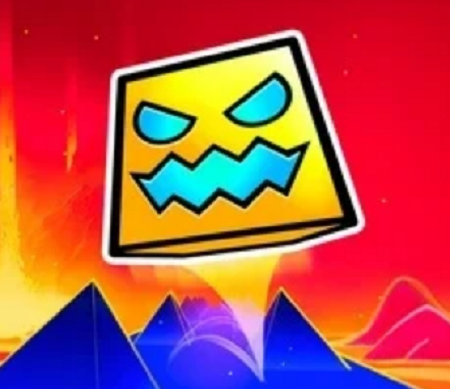
Geometry Dash is a rhythm-based platform game where the player controls a geometric character moving automatically through obstacle-filled levels. There is no traditional story campaign with dialogue or named protagonists. The objective is to reach the end of each stage without touching spikes, walls, saws, or other hazards. Movement is synchronized closely with electronic music, so learning the rhythm of a track often helps with timing jumps and recognizing upcoming sections.
Levels and Game Structure
Official levels gradually introduce new mechanics and become more difficult as the player progresses. Early stages focus mainly on basic jumping, while later ones combine faster speeds, tighter spaces, gravity changes, portals, and several movement forms. Completing levels rewards stars and other collectibles, while secret coins are hidden in optional routes that usually require more precise movement. Practice Mode lets players place checkpoints and rehearse difficult sections without restarting the entire stage after every mistake.
Movement Forms and Mechanics
Geometry Dash changes the way the character moves through portals and special objects. Important mechanics include:
· Cube, which jumps when the player taps;
· Ship, which rises while the button is held and falls when released;
· Ball, which switches gravity after each input;
· UFO, which performs a jump with every tap;
· Wave, which moves diagonally upward or downward;
· Robot, which changes jump height depending on input length;
· Spider, which instantly teleports between surfaces;
· Swing, which alternates gravity while moving through the air;
· jump pads, orbs, portals, speed changes, and gravity modifiers.
These mechanics are frequently combined inside the same level, requiring the player to adjust quickly when the movement rules change.
User-created content is a major part of Geometry Dash. The level editor allows players to build stages with custom layouts, triggers, decorations, effects, moving objects, and different gameplay modes. Created levels can be uploaded and played by others, while rated levels can award stars, moons, and other progression rewards. Platformer Mode removes automatic horizontal movement and allows direct left-and-right control, creating stages closer to traditional platform games.
Progression and How to Play
Geometry Dash does not use character levels or combat upgrades. Progress comes from completing stages, collecting stars, moons, diamonds, secret coins, user coins, and other rewards, as well as unlocking icons, colors, trails, and cosmetic options. Normal Mode requires completing a level from beginning to end without dying, while Practice Mode is useful for memorizing difficult patterns. Success depends on timing, repetition, and learning how each movement form responds to input.
