Related games





Published on: November 2026
Game technology: HTML5
Platforms: PC, Phone, Tablet
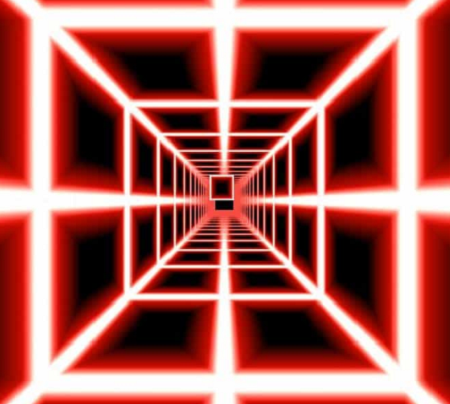
Death Run 3D is a first-person endless runner where the player moves automatically through a neon tunnel filled with obstacles. There is no story, protagonist, or campaign with a final ending. The objective is simply to survive for as long as possible and achieve a higher score before crashing. Movement is extremely fast, so the game focuses almost entirely on reaction time, concentration, and recognizing safe gaps before they disappear from view.
Moving Through the Tunnel
The player can move left, right, up, and down using the arrow keys or WASD. Forward movement happens automatically, and touching an obstacle immediately ends the current run. Hazards can remain stationary, move across the tunnel, rotate, or appear shortly before the player reaches them. Because the obstacles and tunnel walls often use similar colors and shapes, identifying the open route quickly is an important part of surviving at higher speeds.
Four Different Tracks
Death Run 3D does not use traditional numbered levels. Instead, the game provides four tracks with different speeds and obstacle patterns:
· Maelstrom has fewer obstacles and a lower overall difficulty;
· Superluminal uses moving square blocks that can emerge from the tunnel walls;
· Hyper Maelstrom is a faster and denser version of Maelstrom;
· Hyper Superluminal increases the difficulty of Superluminal with more demanding obstacles.
All four tracks can be selected directly rather than being unlocked in a fixed order. This means the player can immediately try a harder course or use Maelstrom to practice movement and reaction timing before attempting the Hyper variants.
Scores and How to Play
Progress is measured through distance, score, achievements, and leaderboard results rather than character upgrades. Y8 also supports achievements and high scores for the game, while the four-track version includes score-based achievements tied to specific modes. There are no weapons, abilities, collectibles, or enemies to defeat.
Successful runs depend on watching farther down the tunnel instead of reacting only to the obstacle directly ahead. Small directional corrections are often safer than moving repeatedly from one side to another, especially when several hazards appear close together. Since a single collision ends the attempt, learning how each track introduces moving blocks and sudden openings becomes more important with repeated play. Death Run 3D therefore uses a simple control system to create a score-based challenge centered entirely on speed, obstacle recognition, and precise movement.
